
The Formalisation Dividend: Rethinking Galamsey.
Galamsey is usually framed as a law enforcement failure. The 2025 production figures suggest it is better understood as a market that the formal sector lost.
01What the damage actually is.
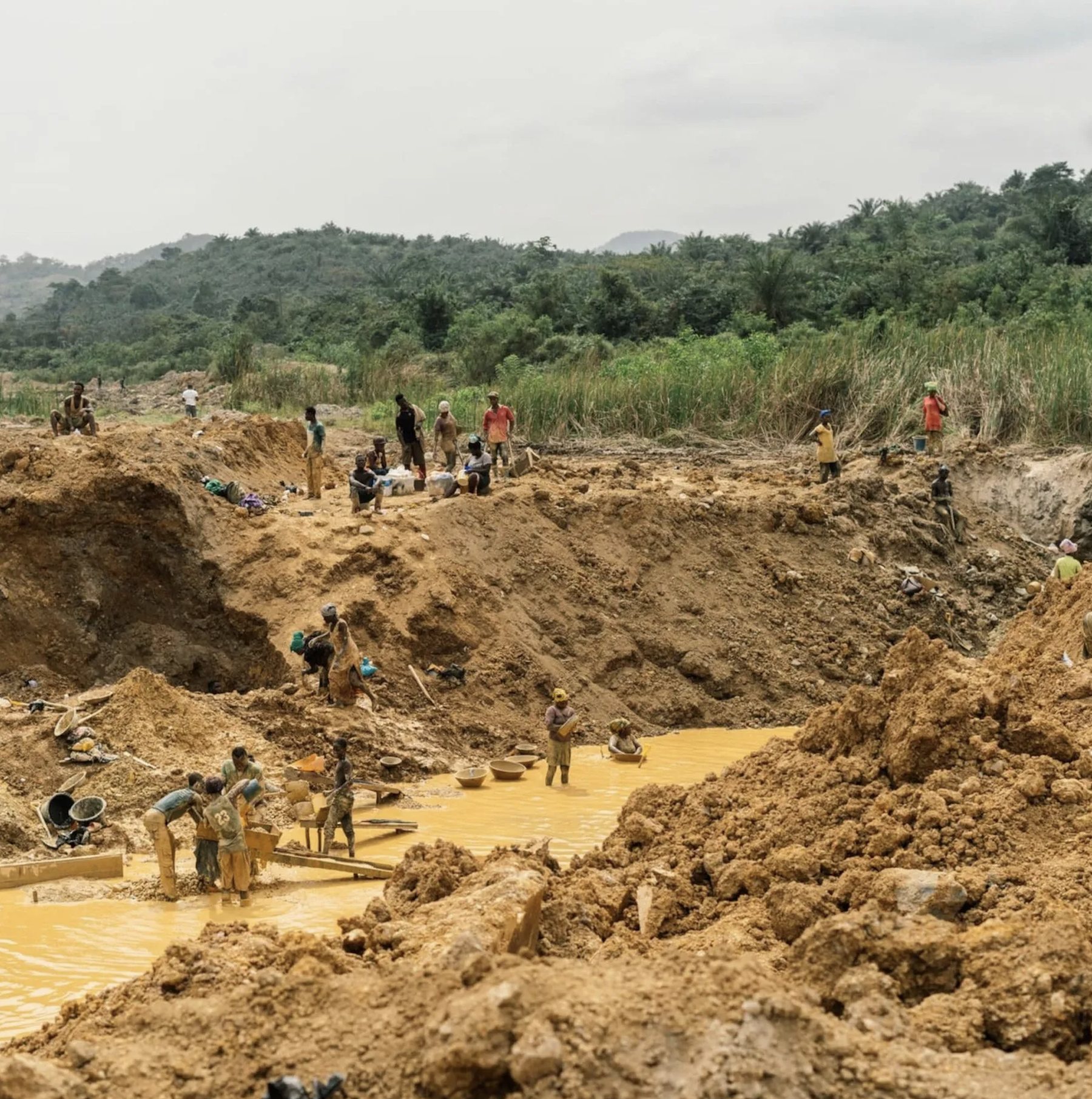
Illegal small-scale mining has polluted around 60 per cent of Ghana’s fresh water sources. The Pra, Ankobra, Offin and Birim carry silt and heavy metals at levels that force treatment plants offline. The Ghana Water Company has warned of scarcity in districts that sit beside rivers.
The agricultural cost runs alongside it. In the Mankurom area alone, galamsey has taken out more than 100,000 acres of cocoa. Mercury and cyanide entering watercourses reach food crops, and the health consequences reported in mining districts include kidney disease, skin conditions and birth deformities.
None of this is contested. It is the response that has failed.
02Why enforcement keeps not working.
Ghana has tried task forces, presidential declarations, military deployment, seizures and public campaigns. The National Anti-Illegal Mining Operations Secretariat and the Blue Water Guards continue to make arrests and impound equipment. In one October 2025 operation across the Western and Eastern regions, twelve excavators were seized and three people arrested.
The pattern is familiar to anyone who has watched it for a decade. Excavators are seized and reappear. Arrests are announced loudly and conclude quietly. The enforcement model treats galamsey as a policing problem, and policing problems are solved by removing the actor.
You cannot remove 52 per cent of national production.
03A market.
The 2025 figures reframe the question. Small-scale mining produced more of Ghana’s gold than the large-scale sector for the first time in over a century of commercial mining. Whatever else galamsey is, it is an economy with labour, capital, logistics and buyers.
The most effective intervention of the last two years was not a raid. It was the Ghana Gold Board taking sole responsibility for buying, assaying and exporting licensed small-scale gold from May 2025. In its first year that channel moved 104 tonnes and earned more than 10 billion dollars in foreign exchange, which the Finance Ministry identified as the largest single contributor to the cedi’s 41 per cent appreciation.
That is what happens when you give an existing market a legal route. The lesson is uncomfortable for an industry that has preferred to describe small-scale mining as criminality: the formal sector did not lose this ground to lawlessness. It lost it to a buyer who showed up.
04What a licensed operator can actually do.
A single licensed mine cannot solve a national problem. It can do a number of things that compound.
- Monitor water at fixed points upstream and downstream and publish the method alongside the result, so that the district has a baseline it did not have before.
- Rehabilitate progressively, so that restored ground is visible while the operation is still running and the standard is demonstrable on the ground.
- Buy locally with terms a small enterprise can survive, because the alternative livelihood argument fails when the formal supply chain pays in ninety days.
- Employ from the host district first, because the recruitment pool and the galamsey labour pool are frequently the same people.
None of that is charity. It is the difference between an operation the district defends and one it tolerates.
05Where Nova Mines stands.
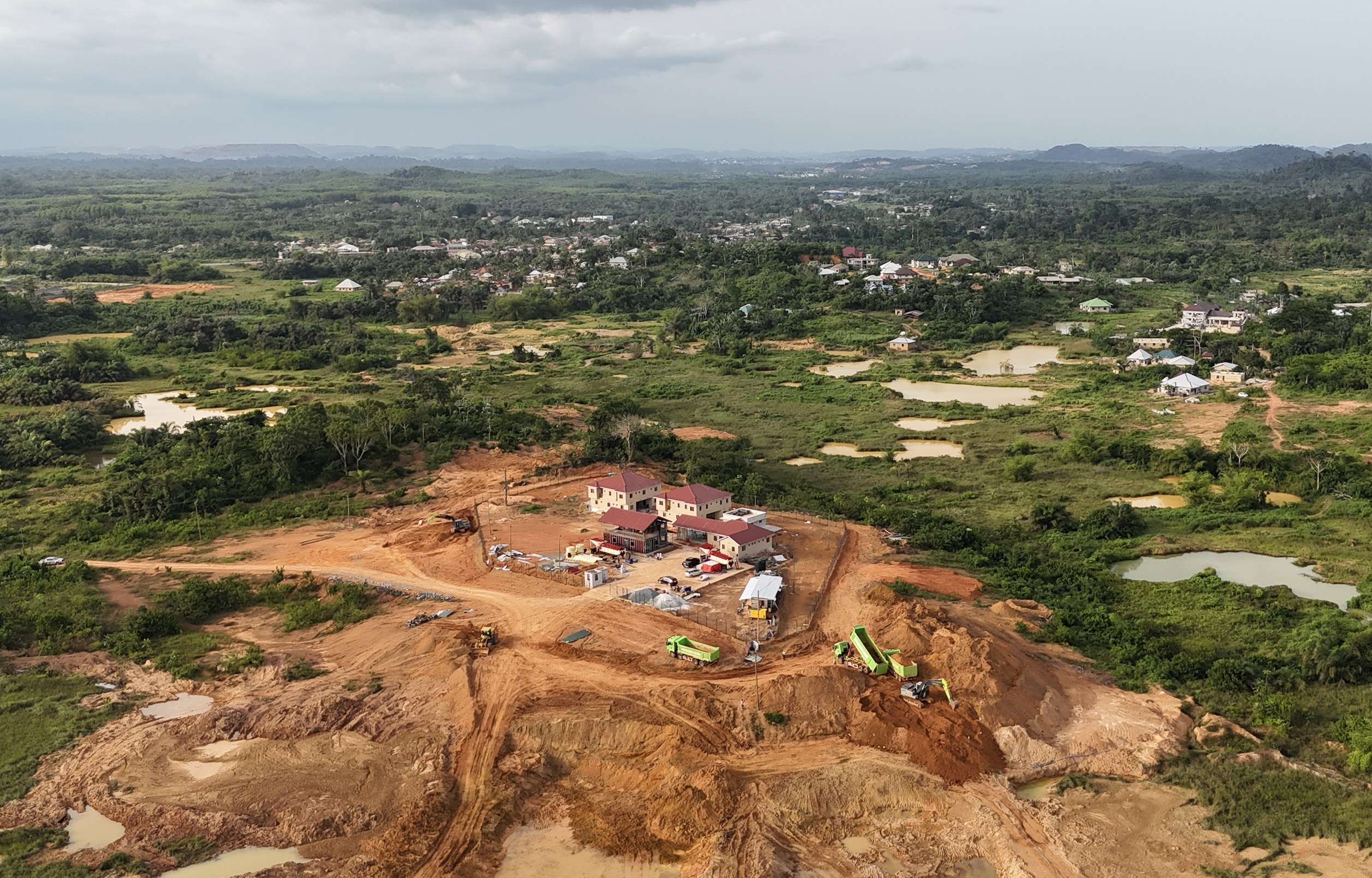
Dompim Pepesa Mines sits in the Western Region, in the same river systems the national conversation is about. We do not treat that as reputational exposure to be managed.
Water is the issue on which Ghanaian mining loses the public, and it is the one where a licensed operator can be most straightforwardly checked. Process water is recirculated, tailings are deposited to engineered specification with freeboard and seepage monitored as routine operating data, and sediment control is maintained as permanent infrastructure, in place before the rains.
Land is returned in phases while the operation is still producing, ahead of any closure budget. Our position is that the difference between responsible and irresponsible mining should be observable from the riverbank.
06Sources.
- Ghana’s illegal gold mining crisis: a national security threat with regional implications, Africa Center for Strategic Studies
- Illegal gold mining in Ghana is causing environmental destruction and damaging development, LSE
- Ghana must stop galamsey before it sinks the country, Institute for Security Studies
- GoldBod exceeds 2025 small-scale gold export target, Ghana Gold Board